Source Electric Powder Auger Filler for Food, Cosmetics, and Chemicals
Compare 30 electric powder auger filler options from verified suppliers. These machines support automatic and semi-automatic filling for powders in food, cosmetics, and chemical industries with varying head counts and capacities.
Key considerations
Products List




Comprehensive Sourcing Guide
Electric Powder Auger Filler Sourcing Guide
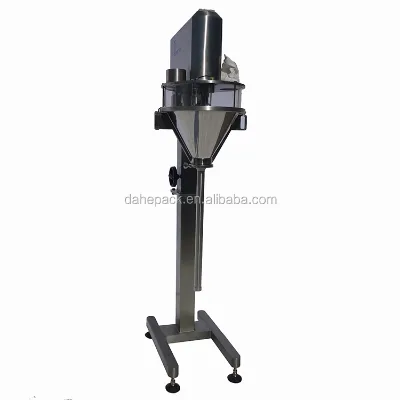
Selecting the right electric powder auger filler requires a clear understanding of how volumetric dosing mechanisms translate into operational efficiency for your production line. These machines utilize a rotating screw, or auger, to dispense precise quantities of powder into containers, making them ideal for materials that are free-flowing or slightly cohesive. The core mechanism relies on the rotation of the auger within a feed cylinder to push material downward, ensuring consistent fill weights without the need for complex pressure systems or liquid-based pumping mechanisms. This simplicity often results in lower maintenance requirements compared to piston fillers, particularly when handling dry, granular, or powdery substances.
When evaluating suppliers, it is crucial to distinguish between fully automatic and semi-automatic configurations, as this choice dictates your labor requirements and throughput capabilities. Semi-automatic units typically require an operator to place and remove containers manually, offering flexibility for small batch sizes or varied container shapes. In contrast, fully automatic systems integrate conveyor belts, capping stations, and labeling modules to create a continuous production line. Buyers must assess their current volume needs and future scalability to determine whether the higher initial investment in an automated line provides a sufficient return on investment through reduced labor costs and increased consistency.
Product Scope and Observed Listing Signals
The market for electric powder auger fillers presents a wide spectrum of configurations, ranging from single-head desktop units to multi-head rotary systems capable of high-speed production. Observed listings indicate that manufacturers offer various structural designs, including linear and rotary arrangements, to suit different factory layouts and space constraints. Linear structures are often preferred for their straightforward maintenance and ease of integration into existing conveyor systems, while rotary designs maximize throughput by filling multiple containers simultaneously. Understanding these structural differences is essential for aligning the machine’s physical footprint and operational rhythm with your facility’s workflow.
Material composition and customization options are significant factors in the observed product range. Many units are constructed from 304 stainless steel, ensuring compliance with food-grade hygiene standards and resistance to corrosion, which is vital for industries handling sensitive or abrasive powders. Suppliers frequently offer customization services, allowing buyers to tailor the filling valve heads, feed cylinder structures, and packaging container lifting mechanisms to specific product requirements. For instance, some models feature single-room feeding for simple applications, while others utilize multi-room feeding to handle complex material behaviors or prevent bridging in hopper systems.
Technical Specifications to Verify
Verifying the filling accuracy and speed is paramount when selecting an auger filler, as these metrics directly impact product quality and waste reduction. Buyers should confirm the stated filling accuracy, which in some observed models is specified around 1%, and ensure this aligns with your regulatory and quality control standards. It is also important to inquire about the filling principle, as some machines may utilize pressure-assisted auger systems to improve consistency for difficult-to-flow powders. Additionally, the number of filling heads, which can range from one to sixteen or more, will determine the machine’s capacity and should be matched against your target production rate.
The power requirements and pneumatic needs of the machine must be carefully reviewed to ensure compatibility with your factory’s infrastructure. While the primary drive is electric, many auger fillers rely on compressed air for container lifting, capping, or auxiliary functions. Buyers should verify the compress air consumption, typically ranging from 0.4 to 0.8 MPa, and ensure their air supply system can maintain stable pressure without fluctuations that could affect filling precision. Furthermore, the type of pump or dosing device, such as a rotor or peristaltic pump, should be confirmed to ensure it is suitable for the specific viscosity and abrasiveness of your powder product.
Compliance and Safety Documentation
Ensuring that the equipment meets relevant safety and quality standards is a non-negotiable aspect of the procurement process. Most reputable manufacturers provide CE certification, indicating that the machine adheres to European health, safety, and environmental protection standards. Buyers should request the official CE declaration of conformity and verify that all electrical components and safety guards meet the required directives. This documentation is not only a legal requirement for operation in many markets but also serves as a benchmark for the manufacturer’s commitment to quality and regulatory compliance.
Beyond certification, comprehensive safety features must be present to protect operators and prevent accidents during high-speed production. Machines should be equipped with emergency stop buttons, protective guards around moving parts, and clear labeling of all operational controls. It is advisable to review the user manual and safety guidelines provided by the supplier to understand the specific interlocks and safety protocols built into the design. Additionally, verifying that the machine’s materials, such as the 304 stainless steel construction, are food-safe and non-toxic is critical if the equipment will be used in the food, pharmaceutical, or cosmetic industries.
Cost Drivers and Commercial Terms
The total cost of ownership for an electric powder auger filler extends beyond the initial purchase price to include installation, training, and ongoing maintenance. Factors such as the number of filling heads, the level of automation, and the degree of customization significantly influence the upfront cost. Buyers should obtain detailed quotations that break down the cost of the main unit, optional accessories, and any necessary integration components. It is also important to clarify the packaging method, whether it is a seaworthy plywood case or a standard wooden carton, as this can affect shipping costs and the risk of damage during transit.
Commercial terms and after-sales support are critical components of the procurement agreement. Buyers should negotiate clear terms regarding warranty coverage, spare parts availability, and the duration of the warranty period. Many suppliers offer engineers available to service machinery overseas, which can be invaluable for resolving complex technical issues without the need for extensive travel. Additionally, understanding the lead time for production and delivery is essential for planning your production schedule. Some models may have a minimum order quantity (MOQ) of one unit, allowing for flexible purchasing, but buyers should confirm if bulk discounts are available for larger orders.
Supplier Qualification and Quality Control
Evaluating the supplier’s manufacturing capabilities and quality control processes is essential to ensure the reliability of the equipment. Buyers should request information about the supplier’s production facilities, including the size of the factory and the number of employees, to gauge their capacity and stability. It is also advisable to ask for references or case studies from previous clients, particularly those in similar industries, to verify the machine’s performance in real-world conditions. Suppliers with a strong reputation for quality are more likely to provide consistent products and reliable support.
Quality control measures should be transparent and rigorous, covering both raw material inspection and final product testing. Buyers should inquire about the testing procedures used to verify filling accuracy, structural integrity, and electrical safety before shipment. Some suppliers may provide test reports or certificates of inspection, which can serve as additional assurance of quality. Additionally, verifying the supplier’s ability to provide customization services, such as modifying the feed cylinder structure or filling valve head, is important for ensuring the machine meets your specific operational needs.
Long-Term Procurement Checks
Establishing a long-term relationship with a reliable supplier involves regular performance reviews and proactive maintenance planning. Buyers should monitor the machine’s performance over time, tracking metrics such as filling accuracy, downtime, and maintenance frequency to identify potential issues early. Regular calibration and cleaning are essential to maintain optimal performance, especially when handling powders that may degrade or accumulate residue. Suppliers should provide detailed maintenance schedules and guidelines to help buyers keep the equipment in top condition.
Future-proofing your investment requires considering the scalability and adaptability of the auger filler. As your production needs evolve, you may need to upgrade the machine or add additional units to increase capacity. Buyers should inquire about the availability of upgrade kits, spare parts, and technical support for future expansions. Additionally, staying informed about advancements in auger filler technology, such as improved dosing algorithms or enhanced hygiene features, can help you make informed decisions about when to replace or upgrade your equipment. By maintaining a strategic approach to procurement, you can ensure that your powder filling operations remain efficient, compliant, and cost-effective in the long run.
FAQs
What is the filling principle for this auger filler?
The filling principle is pressure-based operation designed for powder materials. This machine utilizes a single-head or multi-head configuration depending on the specific model selected for your production line needs.
Which automatic grade options are available for this machine?
Both automatic and semi-automatic grades are available for this equipment. You can select a fully automatic unit or a semi-automatic version based on your specific production volume and operational requirements.
Can the machine handle different packaging container types?
Yes, the machine supports various packaging containers including bottles and boxes. It features pneumatic lifting structures to accommodate different container sizes and shapes during the filling process efficiently.
What certifications does the electric powder auger filler hold?
The equipment holds CE certification to ensure compliance with safety standards. This certification applies to the machinery structure and electrical components used in the manufacturing process for international markets.
How is the machine packed for shipping from China?
The machine is packed in plywood wooden cartons or seaworthy wooden cases for protection. This packaging ensures the equipment remains secure during transit from the origin location in Shanghai or other Chinese ports.
What is the filling accuracy rate for this device?
The filling accuracy rate is approximately 1 percent for consistent dosing performance. This precision is achieved through the specific dosing device and filling valve head design integrated into the machine structure.
Which materials are used to construct the machine body?
The machine body is constructed from 304 stainless steel for durability and hygiene. This material choice ensures resistance to corrosion and meets food-grade application requirements for powder filling operations.